Christianity, a religion with over 2.4 billion followers today, boasts a rich and fascinating history. But where did it all begin? Buckle up, because we’re hurtling back in time to explore the foundational period of the Christian church – the Early Church. This era, roughly spanning the 1st to 4th centuries AD, witnessed the birth of core Christian beliefs, the rise of influential figures, and the remarkable spread of this new faith within the Roman Empire.
The Apostles: Pillars of the Early Church
Imagine a fledgling religion, its teachings passed down by a small group entrusted with a monumental task. Enter the apostles, Jesus’ twelve closest disciples who played a pivotal role in establishing the Early Church. Following Jesus’ death and resurrection, the apostles, empowered by the Holy Spirit on Pentecost (celebrated as the birthday of the Church), embarked on a mission to spread the Gospel – the good news of Jesus’ teachings and salvation.
Spreading the Word
The Early Church wasn’t confined to grand structures. The heart of this movement lay in small, tightly-knit communities. These groups, often gathering in homes, shared meals (known as Agape feasts), prayed together, studied scripture, and offered mutual support. Imagine these early Christians, their faith a burning ember, kindling similar flames in the hearts of others through their words and actions.
These communities weren’t homogenous. They welcomed people from diverse backgrounds – Jews, Gentiles, slaves, and even free women, who often enjoyed a more prominent role compared to other religions of the time. This inclusivity, this sense of belonging based on shared faith, proved to be a powerful magnet, drawing many to the Christian message.
Paul: Apostle to the Gentiles
While all the apostles played a crucial role, one figure stands out – Paul. Initially a persecutor of Christians, Paul’s dramatic conversion on the road to Damascus transformed him into Christianity’s most prolific missionary. Unlike the other apostles who primarily focused on Jewish communities, Paul actively preached to the Gentiles (non-Jews), crafting a theology that bridged the gap between Judaism and this new faith. His tireless travels, documented in the New Testament, established Christian communities across the Roman Empire, earning him the title “Apostle to the Gentiles.”
Facing the Roman Juggernaut: Challenges and Persecution
The path of the Early Church wasn’t smooth sailing. The Roman Empire, with its established pantheon of gods, viewed this new religion with suspicion. Christians were often seen as a threat to the social order, accused of atheism for refusing to worship Roman gods and of disloyalty for refusing to participate in emperor worship. This suspicion gave rise to periods of persecution, with Christians facing everything from imprisonment to brutal executions.
However, persecution, much like a wildfire, often has the unintended consequence of spreading the embers further. The unwavering faith and courage of these early Christians in the face of adversity resonated with many, leading to a paradoxical situation – persecution fueled further growth.
A Seed Takes Root: The Fertile Ground of the Roman Empire
Imagine Christianity as a tiny seed, and the Roman Empire as fertile soil. Several factors contributed to the remarkable spread of Christianity within the vast Roman Empire.
- Pax Romana: The Roman Empire’s period of relative peace and stability provided a safe environment for travel and communication, allowing apostles and missionaries to move freely and spread their message.
- Roman Roads: The well-maintained Roman road network facilitated the movement of people and ideas, creating a highway for the Christian message.
- A Shared Language: The widespread use of Greek, the language of the New Testament, transcended cultural barriers and made Christian texts accessible to a wider audience.
- Appeal of the Message: Christianity’s message of hope, salvation, and equality resonated with many in a society grappling with social and economic inequalities.
The Early Church, born from a small band of believers, defied expectations and flourished in the face of adversity. The dedication of the apostles, the power of community, and the fertile ground of the Roman Empire all played a crucial role in Christianity’s remarkable growth. This foundational period laid the groundwork for what would become one of the world’s most influential religions, shaping the course of history and leaving an enduring legacy that continues to impact us today.
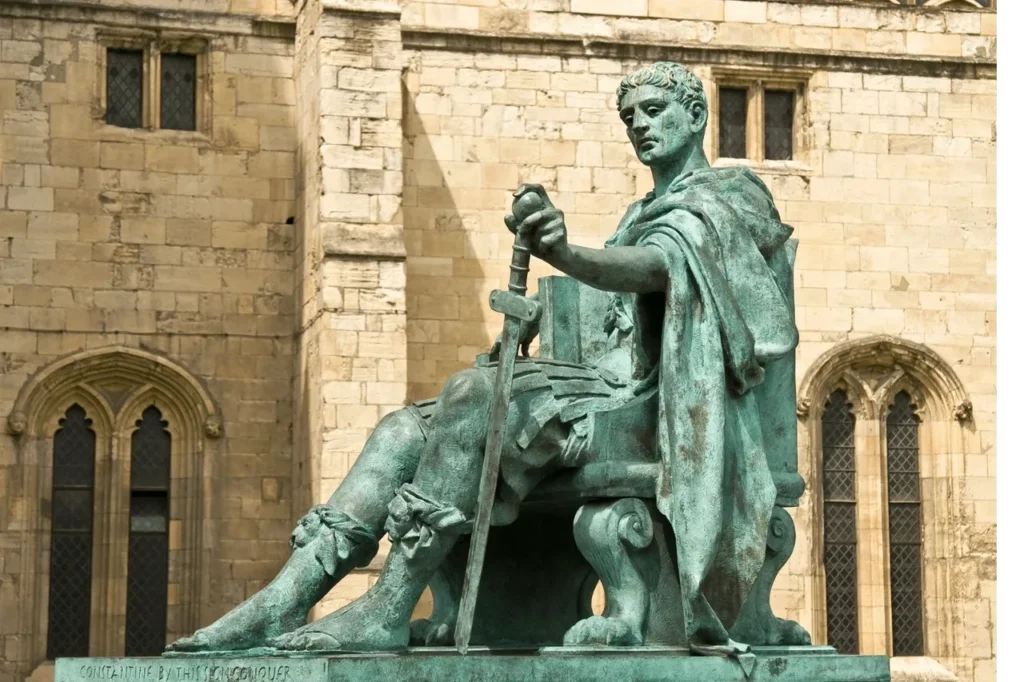
Constantine the Great, who was declared emperor at York, Britain (306 AD), converted to Christianity, convened the Council of Arles (314 AD), became sole emperor (324 AD), virtually presided over the ecumenical Council of Nicaea (325 AD), founded the city of Constantinople (330 AD), and died in 337 AD.
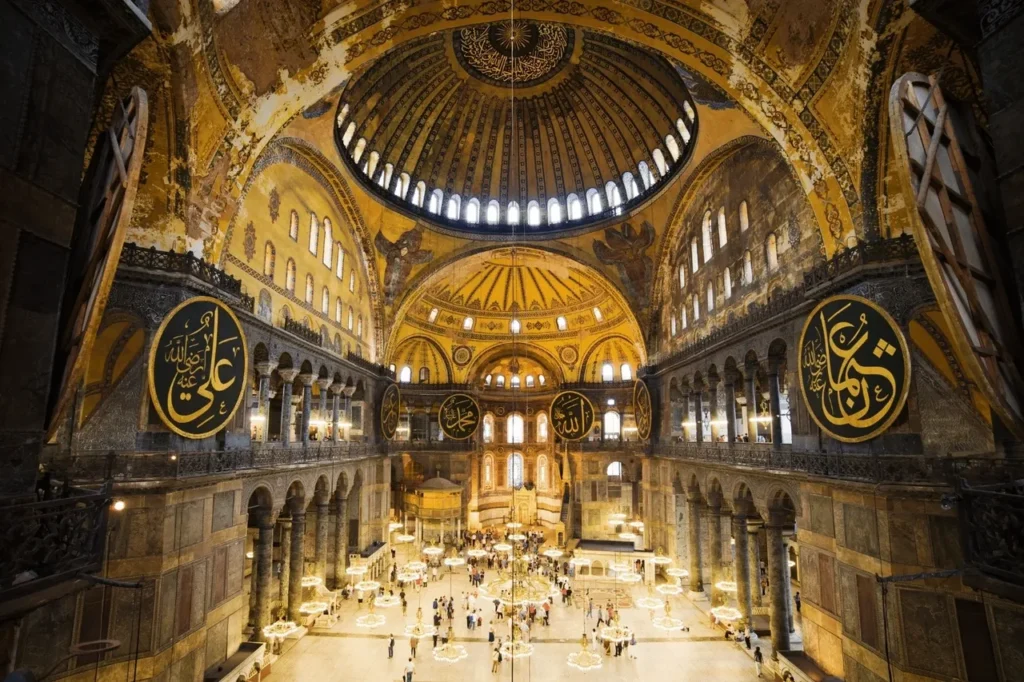
The development of church architecture was stimulated by Constantine’s great buildings at Jerusalem and Rome, and his example as a church builder was emulated by his successors, most notably by Justinian in the 6th century. The exteriors of these churches remained simple, but inside they were richly ornamented with marble and mosaic, the decoration being arranged on a coherent plan to represent the angels and saints in heaven with whom the church on earth was joining for worship. An enormous number of churches built in and after the 4th century have been excavated. The outstanding buildings that survive largely intact, Hagia Sophia at Constantinople (now Istanbul) and San Vitale at Ravenna in Italy, belong to the age of Justinian.