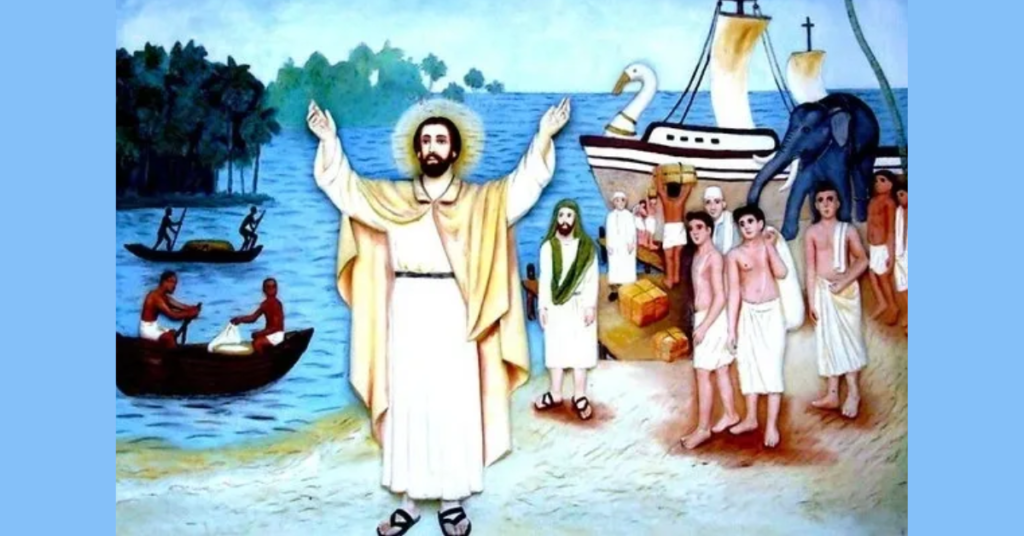
Arrival of St. Thomas at Malabar Coast of Kerala
In the first century, Thomas the Apostle arrived at the Malabar Coast and preached the gospel to the Jewish community of Kerala. Some of the Jews and locals became followers. They were known as Malabar Nasrani and their church as Malankara Church. They followed a unique Hebrew-Syriac Christian tradition which included several Jewish elements and Indian customs.
Here St. Thomas did not appoint any bishops, but an elder (Mooppen in Malayalam) was selected to lead the people. The parish leader was called Edavaka Mooppen and the church as a whole had a Malankara Mooppen. Aslo titles like the Latin word archidiāconus (Archdeacon) was used to refer to them.
Pakalomattom Family
Pakalomattom family was one of the oldest families at Kuravilangad. Thomas Kathanar who later became the first Mar Thoma, was born in this family. Kuravilangad is a town located in the Kottayam district of Kerala, South India. The town is situated in the Meenachil Taluk, about 22 km north of Kottayam.
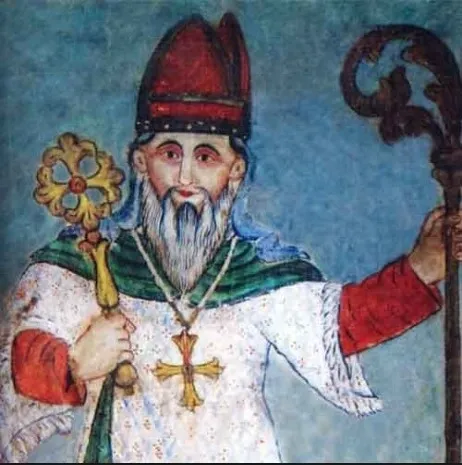
Mar Thoma I, also known as Valiya Mar Thoma (Mar Thoma the Great) and Arkkadiyokkon Thoma (Archdeacon Thomas) in Malayalam and Thomas de Campo in Portuguese was the first native-born, popularly-selected Metropolitan bishop of the 17th-century Malankara Church.
He was the last Archdeacon of the undivided St. Thomas Christians of Malankara (Maliyankara).
Roman Catholic Influence & Coonan Cross (Bent Cross) Oath
The Roman Catholic Church wanted to bring the Church in Malabar (the Malankara Church) under the supremacy of Rome and the Syrian Christians of Malabar, (the Malankara Church) were made part of the Roman Catholic Church under the Pope.
Pakalomattom Geevarghese Kathanar Mooppen (elder), the Arkkadiyakkon (Archdeacon) died in 1637. His relative Thomas Kathanar (who later became Mar Thoma I) was then appointed as the next Archdeacon. Thoma Kathanar and his followers swore the Coonen Cross Oath, that “they would no longer function under Rome”.
Ordainment as a Bishop
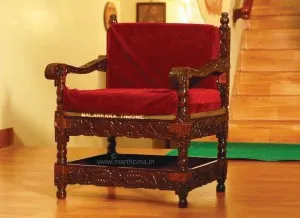
Four months after Coonen Cross Oath, on 22 May 1653, twelve kathanars (priests) ordained Thoma Kathanar as the first Bishop of Malankara by the act of laying hands on him together. They chose the name ‘Mar Thoma’ as they considered him the successor of St. Thomas the disciple of Jesus Christ. A special chair was made and the first bishop of Malankara church was enthroned. This Malankara Throne used for this consecration of Mar Thoma I, is in the possession of the Mar Thoma Church and is kept in the Poolatheen, the residence of the Malankara Metropolitan at Tiruvalla. It has been used in the installation of every Mar Thoma Metropolitan, to this day, so that the continuity of the throne of Mar Thoma is ensured.
Withdrawal of Allegiance to Mar Thoma I
Later on Due to political and monetary pressure exerted by the Carmelite fathers through the Portuguese and the native kings, many of the churches, Kathanars and laymen now withdrew their allegiance to Mar Thoma I. They asked him to give up his dignity of Bishop as they considered that the ordainment was irregular. But Mar Thoma I continued to wear the attire of Bishop and even started giving minor orders and blessing of Holy Oil etc., the acts which, only a Bishop is entitled to do. Thus two parties were formed in the Malankara Church-one party under the Bishop Mar Thoma I and the other party under Bishop Palliveettil Mar Chandy referred to by the Europeans as Alexander de Campo (Chandy Parambil).
Resolution & Assassination Attempts
To resolve the issue, the case was referred to the King of Cochin. The Apostolic Commissary could produce Apostolic briefs from the Pope of Rome, while the Archdeacon’s party (who were with Mar Thoma I) failed to produce any briefs. On 9 October 1661, a Bishop named Sebastiani, tried to capture the Bishop Mar Thoma, with the help of a Portuguese General and the Cochin prince Godavarma II. But Bishop Mar Thoma escaped, disguised as soldiers, so that they could not be recognized by the Nair soldiers.
Arrival of The Dutch East India Company
Regularization of consecration
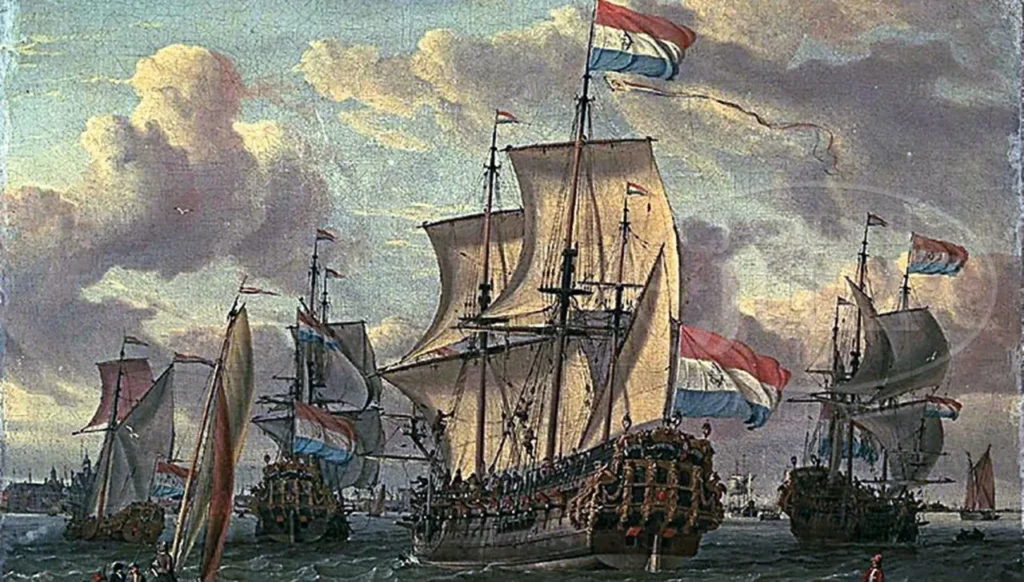
By 1665, Cochin was under Dutch control. That year Gregorios Abdal Jaleel, a delegate of the Patriarch of Antioch from Jerusalem, came to Malankara as per the request of Bishop Mar Thoma, and regularized Bishop Mar Thoma’s Metropolitan consecration.
(The Patriarch of Antioch is a traditional title held by the bishop of Antioch (modern-day Antakya, Turkey). As the traditional “overseer” (episkopos, from which the word bishop is derived) of the first gentile Christian community. This diocese is one of the few for which the names of its bishops from the apostolic beginnings have been preserved. This ancient patriarchate was founded by the Apostle Saint Peter.)
Death
Mar Thoma I died on 25 April 1670 and was buried in St. Mary’s Jacobite Soonoro Cathedral, Angamaly.